Remote Office Assistant for Home Service Companies in 2026: Tasks, Costs & Hiring Guide
 Veronikka Anne LeeScaleSourcePUBLISHED15 Oct 2026UPDATED15 Oct 2026READ7 min
A remote office assistant helps home service companies manage recurring administrative work without requiring another person in the physical office. Responsibilities can include answering customer inquiries, scheduling appointments, following up on estimates, updating customer records, and coordinating communication between the office and field teams. For businesses in HVAC, plumbing, landscaping, fencing, and other home service industries, this can give owners and field employees more time to focus on customers, job sites, and decisions that need their direct attention. The key is knowing which responsibilities can be handled remotely, which still require an on-site employee, and whether the business has enough recurring work to justify dedicated full-time support.
What Does a Remote Office Assistant Do for Home Service Companies?
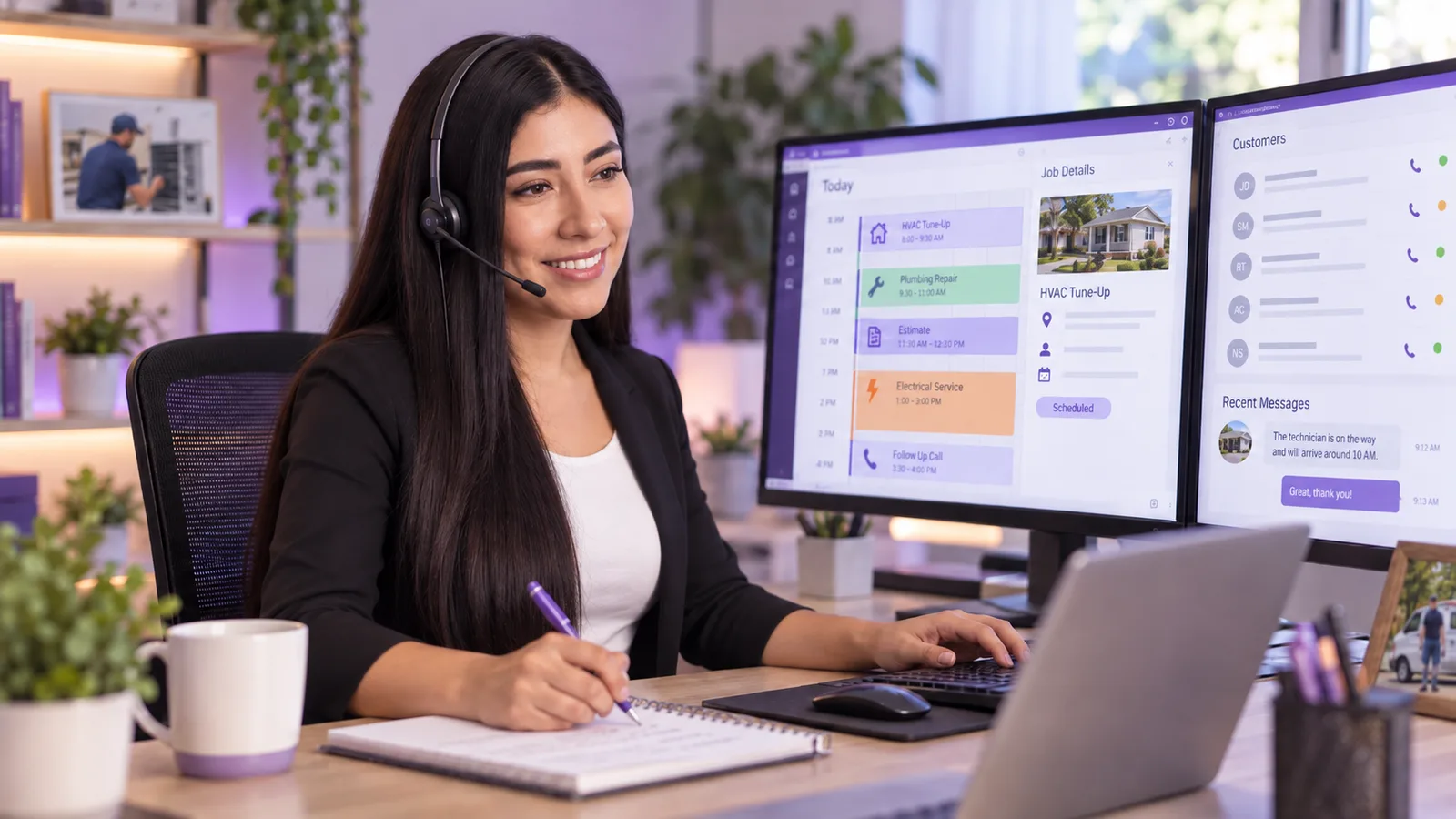
A remote office assistant manages the administrative responsibilities that keep a home service business organized, even when the owner and technicians are out in the field.
For HVAC, plumbing, landscaping, fencing, and other service companies, this often means managing customer communications, maintaining schedules, organizing job information, and making sure important follow-ups don't get overlooked.
Unlike field technicians, remote office assistants don't perform physical service work. Their role is to support the people who do by keeping information accurate, appointments organized, and everyday office tasks moving.
The responsibilities depend on the company's workflow, but the goal remains the same: give recurring administrative work a dedicated owner so the business can operate more consistently.
Which Tasks Can Be Handled Remotely?
Many office responsibilities in a home service company don't require someone to be physically present. With access to the right systems and clear procedures, a remote office assistant can support daily operations from anywhere.
Common responsibilities include:
- Customer calls and inquiries: Answer incoming calls, respond to messages, collect customer information, and route urgent requests to the appropriate team member.
- Appointment scheduling: Book service appointments, send confirmations, manage calendar updates, and help coordinate technician availability.
- Estimate follow-ups: Contact customers about pending quotes, track responses, and remind the sales team about opportunities that need attention.
- CRM and job management: Update customer records, organize work orders, maintain job details, and keep information current in company systems.
- Administrative coordination: Prepare routine documents, organize files, track outstanding tasks, and communicate updates between office and field teams.
- Billing support: Prepare invoice information, track payment statuses, and flag overdue accounts while leaving financial approvals and decisions with authorized staff.
The best starting point is identifying tasks that happen repeatedly, follow a clear process, and don't require someone to be on-site.
Remote vs. In-House Office Support: What's the Difference?
Both remote and in-house office assistants can support daily operations. The right choice depends on whether the business needs someone physically present or primarily needs help managing calls, schedules, customer records, and administrative work.
For home service companies where most customer communication happens by phone, email, or online booking, remote support can be a practical option.
However, businesses that regularly serve walk-in customers, handle physical paperwork, or require hands-on office coordination may still benefit from having someone on-site.
Some companies use both, keeping essential physical responsibilities in-house while assigning recurring digital and administrative tasks to a remote team member.
How Much Does a Remote Office Assistant Cost in 2026?
The cost of hiring a remote office assistant depends on the staffing arrangement, working hours, experience requirements, and services included.
Some businesses hire independent contractors directly, while others work with a remote staffing agency that handles recruiting and employment administration. Understanding the differences between remote staffing and freelancers can help business owners choose the right arrangement for their workload and long-term needs.
At ScaleSource, dedicated full-time remote staffing starts at a flat rate of $2,083 per month for 40 hours of support per week.
The monthly fee includes:
- Recruiting and candidate vetting
- Onboarding support
- HR and payroll administration for the remote employee
- Work equipment
- Ongoing coaching and quality assurance
This allows home service companies to budget for dedicated administrative support without separately coordinating each of these services.
When comparing costs, business owners should consider more than the monthly rate. Recruiting time, equipment, training, administrative responsibilities, and the level of ongoing support can all affect the total cost of maintaining the role.
The goal isn't simply to find the lowest hourly rate. It's to establish reliable, consistent support that fits the company's workload and operating budget.
When Should a Home Service Business Hire a Remote Office Assistant?
Hiring additional office support becomes worth considering when administrative responsibilities consistently interfere with customer service, field operations, or business growth.
Common signs include:
- Missed calls and inquiries: Potential customers struggle to reach someone because everyone is busy handling other responsibilities.
- Delayed estimate follow-ups: Quotes are sent, but nobody consistently checks whether customers are ready to move forward.
- Overloaded owners or managers: Business owners spend evenings catching up on scheduling, emails, and paperwork instead of focusing on higher-priority decisions.
- Disorganized customer information: Appointment details, job updates, and customer records are scattered across different systems.
- Increasing service volume: More jobs and customer requests create administrative work that the existing team can no longer manage consistently.
Before hiring, review how much time these responsibilities require each week. If the workload is recurring, predictable, and substantial enough to support a dedicated position, a full-time remote office assistant may be a practical next step.
If the need is occasional or limited to a few hours per week, part-time or project-based support may be more appropriate.
How to Hire and Onboard the Right Remote Office Assistant
Hiring the right remote office assistant starts with understanding what your business needs help with, not simply finding someone who can perform administrative tasks.
For home service companies, a practical hiring and onboarding process includes five steps:
- Define the responsibilities. Identify which tasks the assistant will own, such as scheduling, customer communication, estimate follow-ups, or CRM updates.
- Prioritize relevant experience. Look for candidates who understand customer service, appointment coordination, and the pace of home service operations.
- Evaluate software familiarity. Determine whether candidates can work with your existing scheduling, communication, and job management systems.
- Document your workflows. Provide clear instructions for handling customer inquiries, updating records, escalating urgent requests, and communicating with field teams.
- Set measurable expectations. Establish standards for response times, scheduling accuracy, follow-up completion, and daily reporting.
A successful onboarding process should also include appropriate system access, initial training, and regular feedback.
The goal is to build a dependable working relationship where the remote assistant understands their responsibilities and the business knows what results to expect.
How ScaleSource Supports Home Service Companies
ScaleSource is a remote staffing agency that helps U.S. businesses hire dedicated, full-time remote professionals, including office assistants for home service operations.
Instead of managing the entire hiring process independently, business owners can work with ScaleSource to find support suited to their daily workflows.
ScaleSource handles recruiting, candidate vetting, onboarding, HR, payroll administration for the remote employee, equipment, and ongoing coaching.
Home service companies can assign responsibilities such as customer communication, scheduling, estimate follow-ups, and CRM management while maintaining control over business decisions and daily priorities.
The goal is to give recurring office responsibilities a consistent owner so business owners and field teams can focus on serving customers and completing jobs.
Frequently Asked Questions About Remote Office Assistants
Not sure which office tasks to delegate first? ScaleSource can help you identify recurring responsibilities, explore the right support role, and understand what dedicated remote staffing could look like for your home service business.
Build Your Free Role ROI Map→